
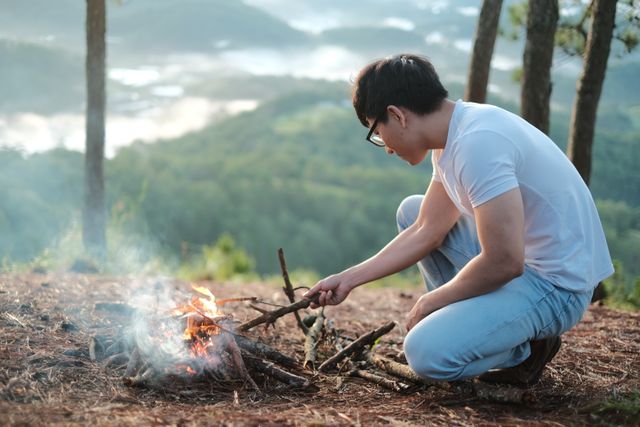

The first time you put up a tarp shouldn’t be in the rain at the end of a long hike. An afternoon at home gives you time to work out where the corners go and try the setup again. That’s a good way to start learning bushcraft. Pick one skill, give it a few tries in a familiar place and take it outside when you’re ready.
1. Watch what experienced people do
A show like Alone can give you something specific to pay attention to. The next time you watch, pick a scene where someone chooses a campsite or puts up a shelter. Pause and ask yourself what they noticed first. Where would rain go? Which direction would you want the opening to face?
The format makes for good television. An episode can jump from a decision to its result, leaving out the time and practice in between. Write down one question a scene raises, then look for a full demonstration that answers it.
2. Try one small exercise at home
Take a rain tarp and a length of cord into the yard. Put the tarp up, take it down and set it up again. Give yourself a simple test. Can you repeat the setup without replaying the demonstration? If a corner sags, change one thing and see whether it helps. Next time, see if you can spot what needs adjusting before starting over.
If you have no space for a tarp, lay out a paper map of your neighborhood and trace a short route you already know. On your walk, stop at familiar junctions and match what you see with what’s on the map. The familiar route makes it easier to notice where you misread a symbol or missed a turn.
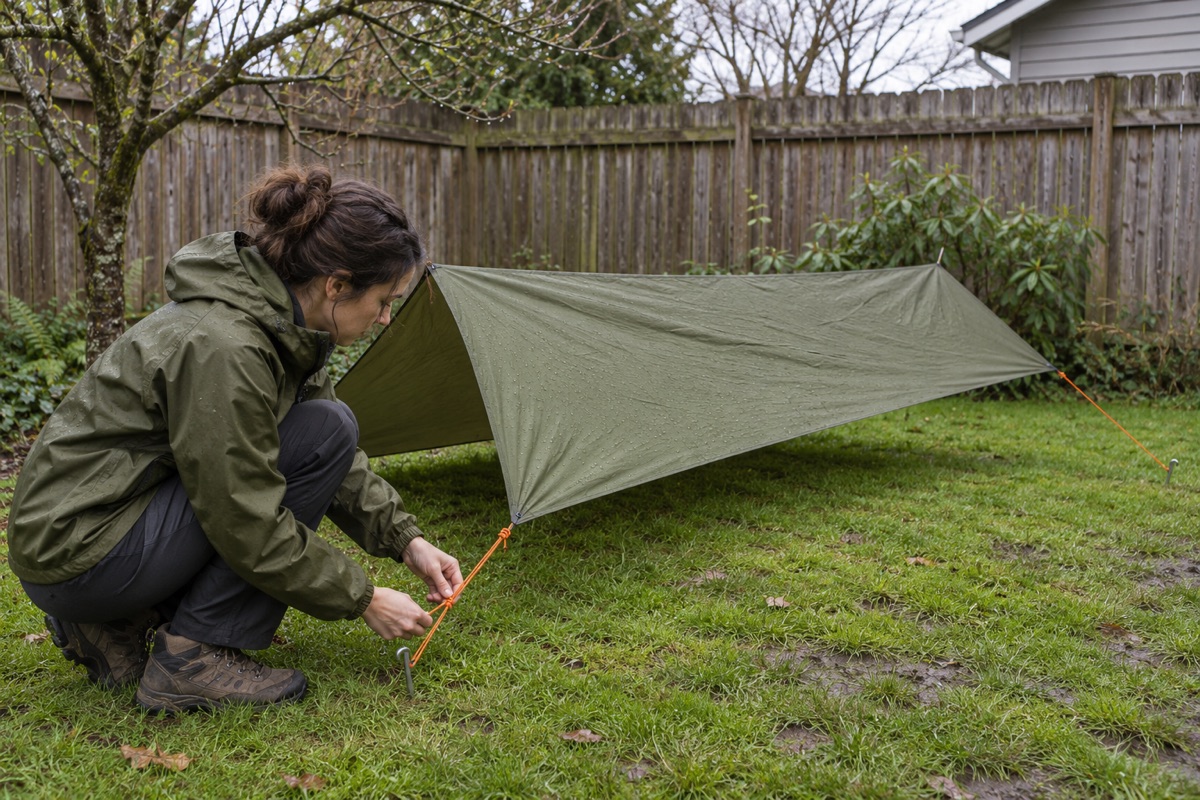
A backyard gives you room to repeat a tarp setup before you need it on a trip. AI-generated illustration.
3. Take an in-person course when you want feedback
A class is worth considering when you keep getting stuck in the same place. You might know what a bearing is and still lose confidence at a trail junction. An instructor can watch you use the map and compass and see where things stop making sense.
Start with the CompareSurvival training directory to find a school or course. Before booking, ask the instructor what you’ll get to do yourself. “Will each of us navigate a short section of trail?” will tell you more than asking whether the course covers maps.
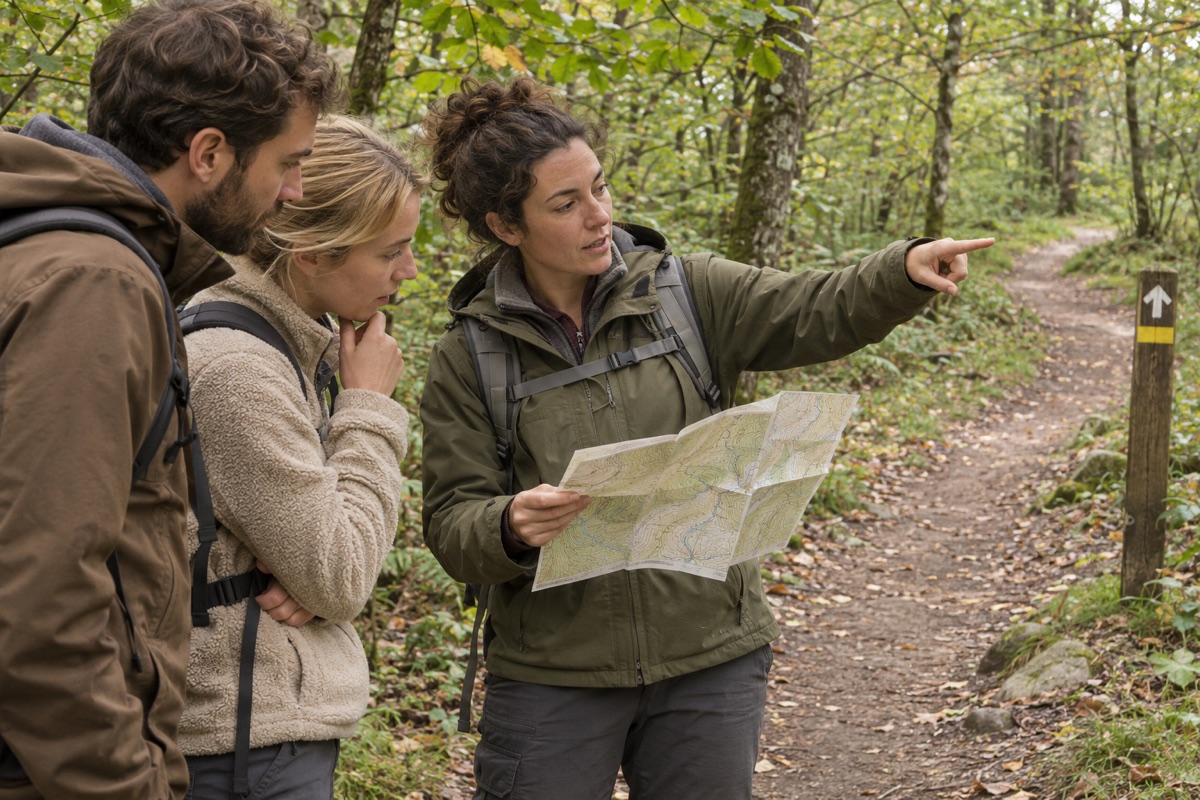
On a navigation course, ask for a turn at choosing which way the group goes. AI-generated illustration.
4. Buy an online course if it gives you something to practice
If travel or scheduling is a problem, an online course can work well for skills you can repeat close to home. Check the sample lesson and syllabus before you pay. Look for a clear exercise, a gear list you can work with and a way to check your progress. For navigation, a good assignment might give you a route to plan on paper and a short walk to see how well your plan holds up.
For your first week, pick one exercise you can do twice. Do the second try from memory and write down where you got stuck. That gives you a specific question to take to the next video, lesson or instructor.

Leave a Comment